
In partnership with:


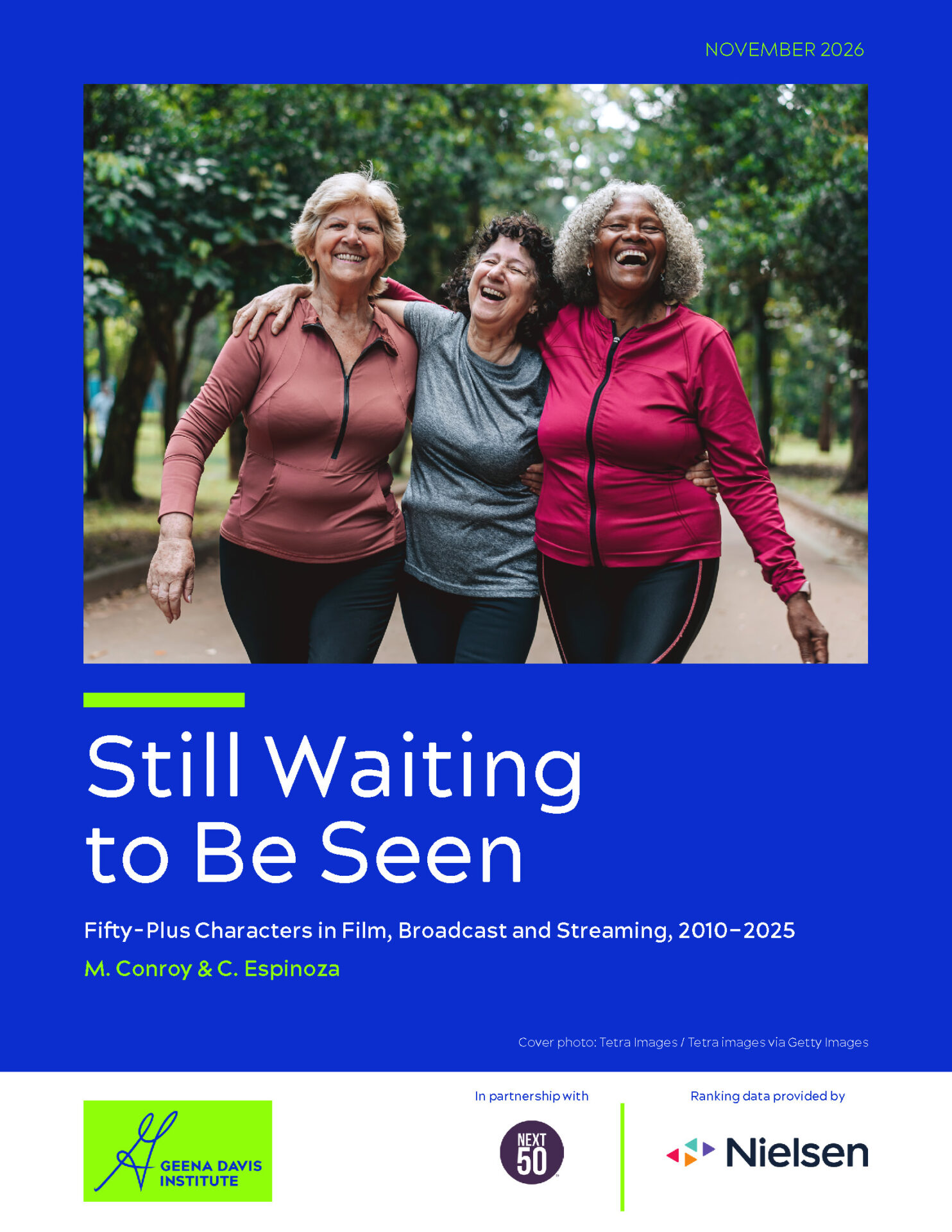
This study, funded by the Next50 Foundation, examines the representation of adults ages 50 and older in media across popular U.S. film and broadcast television from 2010 to 2025, as well as streaming from 2013 to 2025. The sample includes 160 top-grossing films, 160 episodes of top-rated broadcast series, and 120 episodes of popular streaming series. In total, the study analyzes 440 titles and 10,927 speaking characters. Titles featuring predominantly nonhuman characters were excluded because character ages could not be reliably determined.
Key findings for adults ages 50 and older in media
- Older characters remained about 1 in 4 on screen. Overall, 23.9% of film characters, 24.0% of broadcast characters, and 21.4% of streaming characters were adults ages 50 and older. Broadcast and streaming held flat; film saw a slight rise, at most.
- Older women were the most overlooked group. Fifty-plus men outnumber 50-plus women 4 to 1 in film, nearly 3 to 1 on broadcast series, and 3 to 2 on streaming series.
- Broadcast TV gave older actors the most leads. Nearly a third of broadcast leads (29.5%) were adults ages 50 and older, compared with about 1 in 7 in film and streaming.
- Fifty-plus characters were rarely affectionate. In film, broadcast TV, and streaming alike, working older characters were less than half as likely to be shown being physically affectionate as characters under age 50.
- The bigger shift was in gender, not age. In film, men under 50 fell from an estimated 56% of characters to 43%, while women of every age gained ground. On broadcast series, older women were the only group whose share grew (5% to 8%).
- Older women grew, outside streaming. Fifty-plus women more than doubled as a share of film characters (3% to 7%) and grew on broadcast series (5% to 8%). Streaming series showed no change.
- Older casts were less racially diverse. Older characters were less racially diverse than younger ones across every medium, and the gap was widest on streaming (21% vs. 41% people of color in 2021–2025). No woman of color over 50 led a top film or streaming series.
- Villainy skewed older. Older characters were disproportionately written as the threat, the obstacle, or the one to defeat.
Recommendations for portraying adults ages 50 and older in media
- Put older women at the center of the story. In 16 years of top-grossing films, just one of 176 leads was a woman over 50. Men ages 50 and older outnumber their female counterparts 4 to 1 in film, nearly 3 to 1 on broadcast TV, and 3 to 2 on streaming. Studios should develop and green-light projects with women ages 50 and older as the leads, not only as the mother, mentor, or boss of a younger lead. Casting goals for older women in speaking roles should be set and tracked, starting with film, where the gap is widest.
- Cast more older characters — everywhere. About 1 in 4 characters was an adult ages 50 and older, and that share had barely moved since 2010, even though older adults watch more TV than any other age group. Age should be a standard casting consideration on every project, not a choice reserved for “older” genres or themes. When a role’s age isn’t essential to the story, consider casting an older actor.
- Follow broadcast TV’s lead on lead roles. Nearly a third of broadcast TV leads (29.5%) were 50-plus, compared with about 1 in 7 in film and streaming. Broadcast TV shows that older leads can carry popular, long-running series. Film’s older leads grew since 2015, but 25 of its 26 older leads were men. As franchise leads age, new older leads should include women, not only the men already headlining.
- Make older casts as diverse as younger ones. Older characters were less racially diverse than younger ones in every medium. In film, 23% of 50-plus characters were people of color, compared with 32% of younger characters. Streaming’s gap was the widest of any medium by 2021–2025 (21% for older characters vs. 41% for younger ones), and no older woman of color led a top film or a streaming series in our sample. Casting should avoid patterns where “older woman” defaults to white and “older person of color” defaults to male, and treat gender balance and racial diversity among older characters as one goal, not separate ones.
- LGBTQIA+ inclusion doesn’t stop at age 50. Streaming was the most LGBTQIA+-inclusive medium for younger characters (5.5%), but just 1.2% of its older characters were LGBTQIA+, and none appeared in 2021–2025. Films had two 50-plus LGBTQIA+ characters in 16 years, both men in smaller roles. Older LGBTQIA+ characters deserve full lives and relationships on screen, not background roles or punchlines.
- Age isn’t a shorthand for villainy. Among film leads and major supporting characters, 30% of those 50-plus were villains, compared with 9% of younger characters. Older characters filled about a quarter of these roles but half the villain parts, and they were half as likely as younger characters to rescue someone. Writers and casting teams should ask whether a villain’s age is part of the story or just a default, and should cast older actors as protectors, problem solvers, and heroes in action and franchise films.
- Give older characters romantic lives. Older characters were less than half as likely to be shown being physically affectionate in film (9% vs. 20%) and on broadcast TV and streaming (5% vs. 13%). Romance, intimacy, and everyday affection belong in the lives of 50-plus characters, and they should be written without being framed as a joke.
- Build on what’s working — for women, too. Older characters were shown as authority figures: Among characters shown working, those 50-plus were about twice as likely as younger characters to be in charge. But older women were the least likely adult group to be shown working at all (57% in film, compared with 82% of older men), even though, once shown working, they were in charge as often as older men. More older women should be shown at work and in positions of authority, with competence paired with vitality, romance, and friendship in the same character.
- Measure it, and hold the line. The industry should apply the Next Fifty Test at the script and casting stages, not after release. And it should track age, gender, and race in casting data so that progress for one group isn’t mistaken for progress for all. The Geena Davis Institute’s Spellcheck for Bias™ tool is a resource for this.
How to cite this study
Conroy, M., & Espinoza, C. (2026). Still Waiting to Be Seen: Fifty-Plus Characters in Film, TV and Streaming, 2010–2025. The Geena Davis Institute.
Check out our other reports on aging and older adults below
- Seventy Years of Fifty-Plus Actors at the Emmys Gender Gaps in Nominees and Winners (2026)
- Missing in Action: Writing a new narrative for women in midlife on the big screen (2025)
- Fifty-Plus Female Actors Are Recognized Less Than Their Male Counterparts (2025)
- Aging in Play: Representations of Age in Video Games (2025)
- Women Over 50: The Right to be Seen on Screen (2020)
- Beyond the Stereotypes: The Reality of Aging Women in Films (2020)