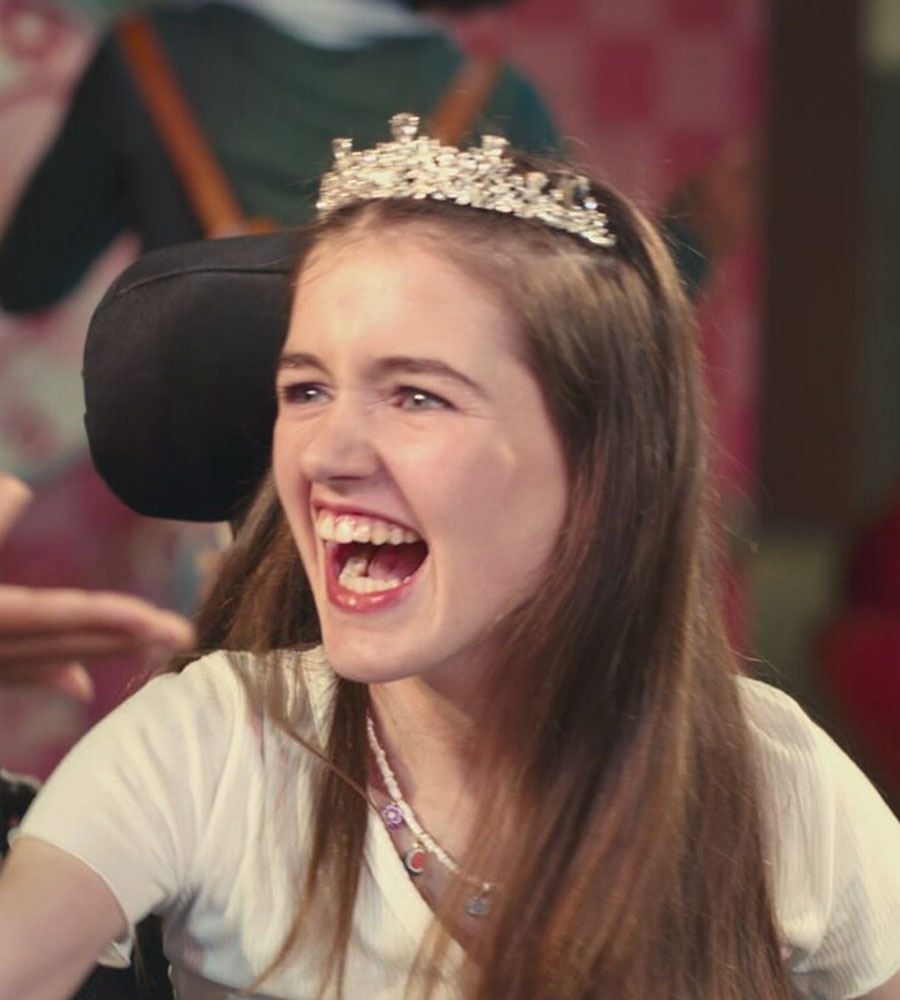
Because she was a supremely shy 10-year-old with cerebral palsy, Phoebe-Rae Taylor initially balked when her mom encouraged her to audition for a movie. Phoebe describes herself back then as “the kid at the back of the room no one looked at. No one spoke to me, not at all.”
And now? One of Phoebe’s biggest challenges these days is keeping up with all her fan mail.
“I’ve gotten so many messages from little kids just saying, ‘Oh, my God, I finally see someone like me on the screen. Thank you,’” said Phoebe, now 16. “It makes me so emotional to think I was once that kid.”
“I saw no one like me in books or on TV shows. I actually thought when I was younger that I was the only person in a wheelchair. I saw no one else.”
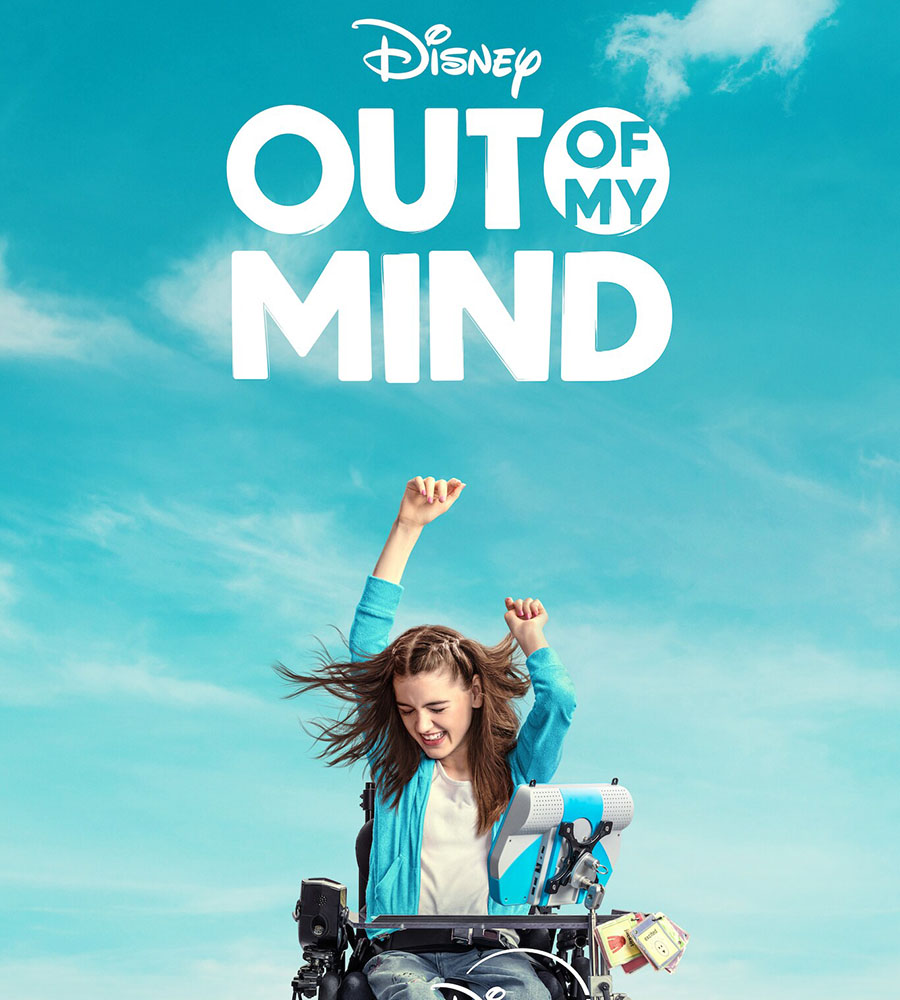
Rarely has the power of on-screen storytelling felt more profound than in Out of My Mind, the Peabody Award-winning and critically acclaimed family film now streaming on Disney+. Adapted from Sharon M. Draper’s bestselling 2010 novel, the film sets a new bar for authentic disability representation as it follows Melody Brooks, a sixth-grader determined to be seen for her intellect rather than her disability.
The Disney Original movie premiered to two standing ovations at the Sundance Film Festival on Jan. 19, 2024. “They loved it just as much as I did,’’ Phoebe said of the audience. “It’s got to be one of the coolest things I’ve ever experienced, a really weird but wonderful thing.”
The Geena Davis Institute (GDI) has long advocated for authentic portrayals of disability; and it’s hard to imagine anything more genuine than the casting choices for Out of My Mind. Melody is a character with cerebral palsy-related speech challenges struggling for acceptance at a middle school where students are sometimes cruel and teachers are occasionally overmatched.
Phoebe had never acted before, but she spent her life living out Melody’s scenes every day. The condescending pats on the head? The frustrating fights with school chums who didn’t understand her affliction? The smarts and humor required to get through it all?
“I relate to Melody in so many ways,’’ said Phoebe, who lives near London, on a recent video call with GDI. “And reading the script for the first time, there were certain scenes I read, and I had to take a minute because I had that exact same situation. … I related to it. It really touched my heart and helped my acting.”
Why Authentic Casting Matters in Disability Representation
As of late July, the film retained a 100 percent fresh rating on Rotten Tomatoes, with Courtney Howard of Variety writing that “Taylor’s performance is the pulse of the picture. Her nuanced expressions shatter hearts in painful moments, in addition to making them swell with pride during everyday triumphs.”
Content creators, take note. This success should serve as a call to action for a media landscape in need of change.
Consider that more than 28 percent of people in the United States have a disability. But in a recent study by the Geena Davis Institute on the state of disability representation in scripted television from 2016 to 2023, we found that just 3.9 percent of characters have a disability.
Additionally, a 2022 Nielsen report discovered that people with disabilities are 34 percent more likely than the general population to feel there isn’t enough inclusion of their identity group in media, and more than half say the portrayals they see inaccurately represent their individual identity groups.
Out of My Mind pushes against media stereotypes and tropes around disability in various ways. One is through authentic disability representation, having the disabled protagonist played by a disabled actor.
Another is by the inclusion of disabled people not just in the cast, but also in the crew. Creators of the film have said that to make the film and set as inclusive as possible, disabled people were included throughout the creative process with disabled cast, crew, consultants, and writers all being a part of the process.
Additionally, while the film shows Melody’s difficulties, it also does a great job of presenting joyous moments in her life. In short, it makes her human.
“This is really important to me, and people need to hear it,’’ Phoebe said. “Disabilities should not be the main focus of a character, because my life is not just my disability. If there’s a character in the film, why should their whole character arc be their disability?”
“I’m allowed to get a job, fall in love, have kids, live a typical life and not the whole point being that I’m in a wheelchair and they look different. I think there should be more characters like that.”
Why Out of My Mind is a Breakthrough in Disability Representation
How did the making of Out of My Mind get so much right? As it turns out, producer Peter Saraf had a talent scout in his own household.
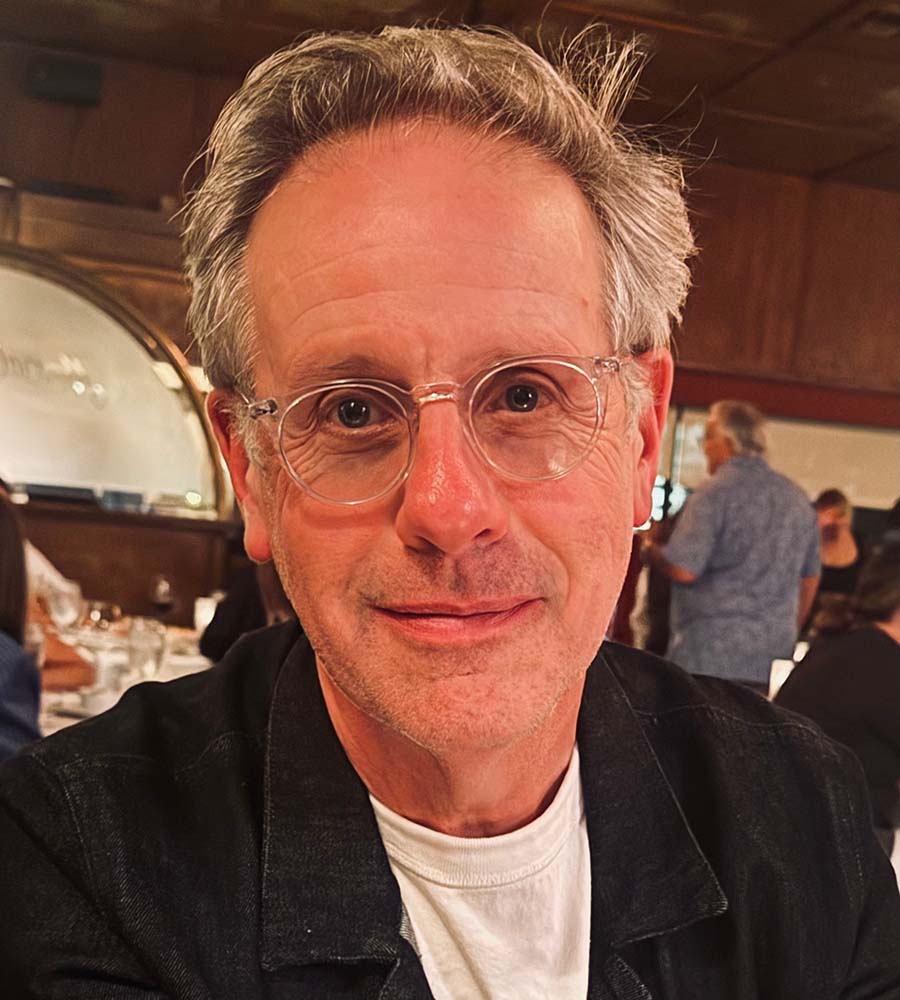
“Yeah, my daughter gave me the book,’’ Saraf said with a laugh. “She read it in fourth grade, and it was her favorite book at the time. It really moved her in terms of the power of literature, and she’s now chosen to be a writer. She gave me the book and said, ‘I think this could make a good movie.’’’
His daughter got a bump in her allowance as part of the deal. And, together, Saraf and director Amber Sealey set out to do the story justice. Their commitment to authenticity was part of the process from the start.
To prepare for filming, Sealey spoke with people with disabilities, and many of them had “very strong thoughts on what they haven’t seen and what they want to see.”
“I think in Hollywood we’ve had a lot of, ‘Oh, this person with a disability is valuable because they happen to (have a superpower),’” Sealey said. “So I just really connected to that. And it was really important to me that the character Melody be a fully fleshed-out 12-year-old girl who has the same hopes and dreams and anxieties any 12-year-old girl would have.”
Ostensibly, Out of My Mind is a film about a young woman, finding the technology, the ability, the courage and the strength to express herself and to say the things that are important to her.
“But as much as it’s about that, Saraf said, “it’s about other people having the patience and grace, and making the effort to listen. And that’s something that’s very universal because the easiest thing is to be cynical, dismissive, judgmental.”
“The thing that takes a little effort, but is a lot more rewarding, is to have a little patience, a little curiosity, and a little grace. And that’s certainly true when communicating with people who might communicate differently from you.”
Jennifer Aniston lends her voice
The plot centers around Melody navigating her school as a nonverbal wheelchair user with cerebral palsy. As her parents and other devoted allies work toward getting her assistive technology to better express herself, we hear Melody’s inner thoughts via voiceover narration.
Those thoughts are voiced in the film by Jennifer Aniston. And it should be noted here that Phoebe – who was named after another “Friends” character – was just a wee bit excited by that choice.
“I cannot tell you how much I love that woman,’’ Phoebe said. “I’ve got a poster behind me with Jennifer Aniston’s face on it. All my life, I’ve adored her. I go to bed watching ‘Friends’ every single night. I can’t sleep without it.
“So when I got told Jennifer Aniston not only knew who I was, she was actually playing a part in this project, I hysterically cried for hours on end because somehow this amazing experience just got better.”
That dash of star power helps Out of My Mind contribute to changing the media landscape, one in which a disabled actor plays the lead character. This dynamic can also be seen in films like “CODA” (2021) and “Eternals” (2021). But in a Geena Davis Institute study, we found that just 21 percent of characters with a disability were authentically cast by actors with the same (or a similar) disability.
The beauty of Out of My Mind is that storytelling is so natural, the audience never thinks of the statistics.
“The film is not meant to be a lecture, you know?” Sealey said. “It’s meant to be something that you feel in your heart and your soul and hopefully something touches your brain and helps you change your behavior.”
When the film premiered at Sundance, a pair of sustained standing ovations greeted the closing credits, with many in the crowd dabbing away tears. Later that year, Phoebe won the See It, Be It Award at the Bentonville Film Festival, an annual event co-founded by Geena Davis. That honor goes to someone who has opened doors for people like them through their work and influenced the entertainment industry and pop culture through the creation of content that empowers stories that are otherwise underrepresented.
The ovations and honors serve as more evidence that audiences are ready for authentic portrayals of disability on screen. Out of My Mind serves as a powerful counterargument to the frustrating reality of media statistics.
Ending harmful stereotypes and tropes
Studies show that characters with disabilities are often subject to demeaning stereotypes.
- For example, GLAAD’s “Where We Are” study from TV 2021-2022 found that characters with disabilities made up just 2.8 percent of TV series regulars. A study by the Geena Davis Institute analyzed new TV programming in 2022 for children and found that only 1.2 percent of characters had a disability.
- “Disabled mimicry” can often be the result of a lack of authentic casting practices, which is “the performance of disabled roles by nondisabled actors or actors without the specific disability represented, which is often reduced to mimicking disability through physicality and vocal intonation.”
- Some disability narratives approach disability “as a mystery in need of explanation,” which can contribute to the cultural and systematic exclusion, discrimination against, and exploitation of people with disabilities.
Can things change? In one of the more powerful lines of the movie, Melody’s father, played by Luke Kirby, tells a teacher: “If Melody’s meeting your expectations, why not raise your expectations?”
While making the film, it didn’t take long for Saraf and Sealey to realize that they were onto something. Sealey said one of her favorite moments from Out of My Mind came during the casting process.
“We were auditioning a ton of kids, and I remember one young man who was 14 or 15 and had cerebral palsy,’’ Sealey said. “And he was saying, ‘Even if I don’t get the part, I don’t care. I’m just so happy that you guys are making a movie about kids like me. I wish this movie would have been around when I was a kid.’
“He made me cry. This 15-year-old was thinking proactively about other children who would be maybe 5, 6, 7, 8 years old and see this movie and get to see somebody like him, living their best life, and how meaningful that would be. It was just really touching.
“And since then, almost every other day I get a message on Instagram from somebody who has a child with a disability and they just talk about how much the film has touched them and meant to them.”
THE GDI LENS: Cultural Commentary From Our Research Team
In GDI’s work studying disabled characters, where does a film like Out of My Mind fit into the broader media landscape?
At the Geena Davis Institute, disability is one of the key identities we track in our media research. In our recent study of scripted television from 2016 to 2023, we found that just 3.9% of characters had a disability. That number fluctuated year to year—dropping as low as 2.6% in 2020 and peaking at 4.7% in 2021—but showed no clear upward or downward trend over the eight-year period.
A 2022 Nielsen report looked even further back, analyzing film and TV content from 1918 to 2022. It found that only 4.2% of titles were tagged as having disability-related themes.
For context, more than 28% of people in the United States live with a disability.
The gap between real-life demographics and on-screen representation remains wide—and persistent.
That’s why a film like Out of My Mind is so important. It not only boosts visibility for disabled people on screen, it does so through authentic representation. The lead character, Melody Brooks, is played by Phoebe-Rae Taylor, a young actor with cerebral palsy—bringing lived experience to the role and deepening the performance’s authenticity.
While many films include disabled characters, far fewer cast disabled actors to play them. In our study, only 21% of characters with a disability were portrayed by someone with the same or a similar disability.
Out of My Mind stands out not only for getting this right, but for showing how powerful it can be. The film maintains a 100% critic score on Rotten Tomatoes—proof that authentic casting isn’t just the right thing to do; it also resonates with audiences and critics alike.
How does Out of My Mind push against media stereotypes and tropes around disability and cerebral palsy?
Out of My Mind challenges stereotypes about disability on multiple levels—and it starts with who’s telling the story.
Their commitment to inclusion didn’t end there. Disabled people were involved throughout the production—from cast to crew, consultants to writers—helping ensure the story was shaped by lived experience, not just observation. That kind of representation behind the scenes often leads to richer, more respectful representation on screen.
The film also breaks away from the tired trope of focusing only on what a disabled character can’t do. Yes, Out of My Mind addresses the challenges Melody faces, but it does so without reducing her to them. We see joy in her life. We see humor, curiosity, and talent. And we see clearly that many of the barriers she faces aren’t about her disability—they’re about how others perceive it.
In her closing monologue, Melody makes that point powerfully. It wasn’t her cerebral palsy that held her back, she says—it was the people who underestimated her. They were the ones who made her world smaller. That’s a direct challenge to one of the most common media tropes: that disability is the problem. This film flips that on its head.
At the Geena Davis Institute, we offer three key recommendations for improving disability representation:
- Cast disabled characters authentically.
- Show the full spectrum of disabled life—including joy, agency, and ambition.
- Reject the idea that disability equals “otherness.”
Out of My Mind does all three.
It also shines a light on real-world issues, like the complicated and often biased systems disabled people must navigate to access support. One standout scene shows Melody undergoing a cognitive test to qualify for a communication device—an experience that reflects the frustrating subjectivity disabled people often face in healthcare. Still, the film doesn’t dwell on hardship. It reminds us that Melody is more than her diagnosis. She’s a history whiz, a deep thinker, and someone with a sharp sense of empathy.
And when others slow down long enough to really see her—they realize that, too.
What Makes an Effective Portrayal of Disability On Screen?
- Authentic casting matters.
Authentic casting means that characters with disabilities are played by actors who share the same disability. According to the Ruderman Family Foundation’s Disability Inclusion in Movies and Television report (2019), nearly half of U.S. households want to see disabled characters in film portrayed by disabled actors—and many say they’d subscribe to platforms that commit to that standard. - Intersectionality should be part of the conversation.
In our study on disability representation in television, we found that most disabled characters were white—significantly less racially diverse than their nondisabled counterparts. That’s why it’s important to consider multiple identities when casting, including race, gender, and age.
A strong example of this is the character Makkari in Eternals (2021), played by Lauren Ridloff—a deaf actor who is also a Black woman over 40. It’s not just authentic casting; it’s intersectional representation done right. - Show the realities of disabled lives—without reducing characters to their disability.
Films like CODA (2021) portray what many disabled families experience daily: joy, love, and community, with occasional challenges that often stem from other people’s unwillingness to accommodate, not from the disability itself.
That distinction is key. The most powerful stories are those that acknowledge systemic barriers while also showing disabled characters as full, thriving human beings—not defined by what they lack, but celebrated for who they are.
See Her. Hear Her. Rethink What’s Possible.
Out of My Mind isn’t just a film about a girl finding her voice—it’s a reminder of what happens when we finally start listening. Here’s how to keep the momentum going:
🎬 Watch the film. Or rewatch it. Notice the details—Melody’s wit, her frustration, her joy. And pay attention to what doesn’t get said, too.
💬 Talk about it. Around the dinner table, in writers’ rooms, in classrooms. Ask the hard questions: Who’s missing? Who’s misunderstood? What stories haven’t we told yet?
📚 Learn more.
- For creators and execs: Dive into GDI’s research to understand why authentic, intersectional casting matters—and how to do it well. Check out the toolkit that accompanied our State of Disability Representation in Television report.
- For Gen Z changemakers: Follow Phoebe and fellow advocates Crutches & Spice and Sofía Jirau on Instagram for bold, honest on disability, identity, and visibility in pop culture.
- For parents and caregivers: “Talk and Take Action: A Family Guide to Disability Inclusion” offers practical, age-appropriate ways to talk to kids about disability, inclusion, and respect. While it isn’t media-specific, it provides great language for discussing what kids see on screen—like Melody’s communication device, her challenges, and her strengths—with empathy and curiosity.
📣 Share it. With a friend. With your team. With someone who might see themselves in Melody—and someone who never thought they would.
Let Out of My Mind be the beginning—not the exception.